SIBO: Definition, Symptoms, Diagnosis, Causes and Related Conditions – Part 1
What is SIBO?
Small Intestinal Bacteria Overgrowth (SIBO) is defined as a gastrointestinal condition that creates a dysbiosis in the digestive tract, particularly affecting the small intestine but could also affect the stomach. This dysbiosis is caused by non-friendly bacteria that is normally housed in the large intestine (colon) migrating into the small intestine and even the stomach causing an imbalance of good and bad bacteria in the gut biome.
A SIBO imbalance causes significant motility issues and bowel changes that include bloating, flatulence, cramping, abdominal pain, diarrhea or constipation, and fatigue. In more serious cases people may experience malabsorption issues, nutritional deficiences, malnutrition, and even unwanted weight loss. It can also cause issues in supporting systems and may be exacerbated by complications from supporting systems, such as the pancreas and gall bladder.
It is estimated up to 22% of the population has an active SIBO condition, which is thought to be an underdiagnosed percentage. This is due in part to a non-standard testing methodology, confusion with other digestive disorders such as IBS (Irritable Bowel Syndrome), and lack of reporting by patients due to asymptomatic or nonspecific symptoms. However, it is estimated up to 78% or IBS patients have a SIBO condition and do not recognize it. (1)
SIBO can be a painful, debilitating and isolating condition that negatively impacts your quality of life. It could last weeks to months depending on your overall health. However, it is recoverable if treated properly. And, if you can identify the root cause(s) of your SIBO and fix that problem you will be better able to heal your SIBO.
Let’s explore symptoms, causes, and related conditions in this article. In the next two articles we will examine complications, treatments and how to know you’re healing. Make sure you read all three articles to get a comprehensive overview of this challenging and debilitating imbalance.
How Does it Manifest?
SIBO typically presents with chronic gastrointestinal distress, most notably significant abdominal bloating, distension, pain, cramping, and either diarrhea or constipation. The motility issues are usually the first thing you notice. Your doctor will usually try to eliminate the most common gastrointestinal issues first before considering SIBO or other serious digestive conditions. Tests they may run include:
- Gastrointestinal panel (72 hour test to check for standard bacteria, viral or parasitic infections)
- Fat absorption test (check for proper gallbladder function and ability to digest fats)
- C-DIFF (intestinal tract infection especially if recently taken antibiotics)
- Fecal Elastase-1 (FE-1) test to measure digestive enzyme production by the pancreas
Western medicine does not have a lab test for SIBO. Currently, the only means of testing for SIBO is from a culture of fluid sampling taken from inside your small intestine via an invasive procedure called an endoscopy. Their diagnosis will come from the culture analysis and a list of symptoms, negative test results from the above list, and duration and severity of your condition. You may want to consider an outside test for confirmation of SIBO and its type (covered below).
Symptoms of SIBO
The following is a list of common symptoms of SIBO, which may also include SIFO (small intestinal fungal overgrowth), which frequently co-occur together.
Symptoms of a SIBO imbalance include:
- Persistent diarrhea (for hydrogen and hydrogen sulfide cases) or persistent constipation (for those with methane SIBO).
- Abdominal pain, bloating, and cramping, which may be worse shortly after meals
- Weight loss due to malabsorption issues
- Brain fog or cognitive issues from body nutrition and fluid drain
- Depression, frustration and anxiety from social isolation and needing to be home near a bathroom
- Dehydration and weakness due to malabsorption, nutritional deficiencies and malnutrition issues
- Fatigue
A Note About Diarrhea
Changes in your motility, particularly diarrhea, is probably the first symptom you will experience. As SIBO progresses, diarrhea intensity and duration will progress. You may find yourself going to the bathroom up to 20 times (more or less) per day, often with very little notice you need to evacuate.
You may also have “explosive” diarrhea from the large stored gas in your digestive tract. It can be painful with lots of discomfort in your abdomen. Experiencing diarrhea, explosive or regular, can be quite challenging as you may not always make it to the toilet in time thus creating a messy situation. You will need to take extra care during this phase to keep this area clean to avoid infections, such as an UTI (urinary tract infection), which is common. You may also need to shower or bathe more frequently to ensure continued cleanliness.
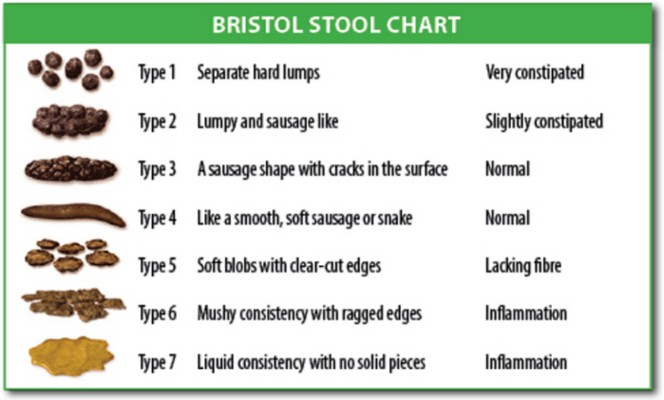
It can be quite debilitating, frustrating,exhausting and depressing to be held hostage by your toilet. You will realistically remain at home and isolated until your bowels return to normal. You may need to make plans for grocery delivery, pet walkers, shopping and home visits for social connections until you can successfully leave the house with controlled motility. Expect healing to take two to six months (or longer) so this is not a quick process. Pack your patience!
Become familiar with the Bristol Stool Chart (below). You will probably start with diarrhea at type 7 with a goal to move to loose stools at type 5 and eventually return to normal at type 3 or 4.
Diagnosing SIBO
Currently there are two ways to test for SIBO. Each comes with some skepticism on efficacy. A gastroenterologist will usually recommend a culture grown from a fluid sample taken from your small intestine via an endoscopy. While this is the gold standard of testing, it is a costly and invasive process, which may result in inconclusive results.
The second and easiest way to test for SIBO is through an at-home one-day test that can be returned by certified mail where it will be tested for SIBO confirmation and SIBO type. You will take a baseline breath test in a separate testing pouch. Then you will drink a glucose or lactulose solution*, wait for it to be fermented into a gas and then begin a timed set of breath tests. You will fill eight additional breath pouches over about two hours. All pouches will be packed up and sent back to the testing center for processing via certified mail. Results should be available within a week.
What does the test measure:
- Hydrogen is produced when certain bacteria consume sugars.
- Hydrogen levels are considered abnormal when they rise greater than ≥20 ppm (parts per million) from the baseline within 90 minutes.
- Methane is produced when archaea (single-celled organisms similar to bacteria) consume hydrogen.
- Methane levels are considered abnormal if they reach ≥10 ppm (parts per million) at any point during the breath test.
- Hydrogen sulfide is produced when sulfate-reducing organisms consume hydrogen.
- Hydrogen sulfide levels are considered abnormal if they reach ≥3ppm (parts per million) at any point during the breath test.
There are several commercial SIBO tests on the market. Some may be wholly or partially covered by your health insurance. Check with your gastroenterologist or other health professional before purchasing out of pocket. If you need to purchase out of pocket choose a test that can perform all three of the above tests. The only one I am aware of at this time that can differentiate between the three is TrioSmart.
*Note: the testing solution is similar to a thick liquid sugar syrup and will upset your system for the duration of the test. This is how your system will generate enough gas that can be identified as hydrogen, hydrogen sulfide or methane.
Read more about the methods used to test for SIBO and their efficacy rates.
What Causes SIBO?
There are many conditions and situations that can lead to SIBO development. It is rarely a primary disease but rather a complication of an existing condition. Identifying and addressing the root cause of your SIBO will help heal the imbalance and prevent it worsening or return in the future. You can still heal your SIBO even if you can’t identify the root cause at this time. It is something you can work on once healed.
This is a comprehensive list of risk factors or contributors to the development of SIBO:
- Structural/Anatomic
- Small intestine diverticula
- Small intestine strictures (radiation, medications, Crohn’s disease)
- Surgically created blind loops
- Resection of ileocecal valve
- Fistulas between proximal and distal bowel
- Gastric resection
- Motility Disorders
- Gastroparesis
- Small bowel dysmotility
- Celiac disease
- Chronic intestinal pseudo-obstruction
- Irritable Bowel Syndrome
- Metabolic Disorders
- Diabetes
- Hypochlorhydria
- Elderly
- Organ System Dysfunction
- Cirrhosis
- Renal failure
- Pancreatitis
- Immunodeficiency states
- Crohn’s disease
- Celiac disease
- Malnutrition
- Medications
- Recurrent antibiotics
- Gastric acid suppression (2)
Here are nine main root causes of SIBO. You will note that there is a dysfunction of the gut-brain connection and the vagus nerve that play an important part in motility and digestive tract activity. There may be more but these are the most common causes. Hopefully you can identify your root cause and heal it so you can effectively address your SIBO.
- Post-infection irritable bowel syndrome (PI-IBS) / Food Poisoning
- Hyperglycemia (high blood sugar)
- Too much or too little gastric acid (use of PPIs (proton pump inhibitors))
- Autoimmune diseases
- Thyroid conditions (hypothyroidism) *
- Antibiotics
- Stress
- Opioids
- Abdominal adhesions (3)
*Note: there is a 54% prevalence rate of people with hypothyroidism developing SIBO. Those with hypothyroidism should learn the signs and symptoms of SIBO in case the condition presents itself. Please see the article on thyroid conditions and diseases to test if you might be hypothyroid.
There are a few surprising root causes of SIBO that may be of interest. Many of you may be able to relate to these and they are relevant in your quest to understand and heal your SIBO.
Related Conditions
There are several gastrointestinal dysfunction issues that can co-exist with SIBO or be misdiagnosed instead of SIBO.
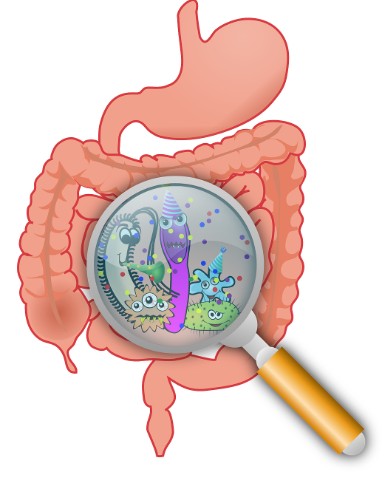
Small Intestinal Fungal Overgrowth (SIFO)
SIFO (small intestinal fungal overgrowth) occurs around 34% of the time with those with a SIBO imbalance. It has much of the same symptoms as SIBO thus making a differential diagnosis difficult. Currently the only test for SIFO is analyzing a food and fluid sample taken from the small intestine via an endoscopy, which is costly and invasive. It has a low reliability level trying to identify both type and quantity of bad fungal strains in the system.
The two main SIFO fungal components are a Candida yeast infection and mold colonization. They primarily live and proliferate in the small intestine. This form of dysbiosis is often linked to weak immunity, PPI (proton pump inhibitor) use for stomach acid issues, or frequent antibiotic use. Treatments for SIBO often do not resolve fungal infections unless your antimicrobial also happens to contain an antifungal component.
How to address your SIFO? Eating two to three nutritional meals without grazing in between those meals allows your digestive system to “rest and digest” appropriately so that the gut can effectively clean your small intestine. The biggest thing to avoid is eating carbohydrates or sugars. This can be challenging as SIFO can create carb cravings. Fungi and Candida thrive on sugars and continue to overgrow in your system. It is imperative, just as with SIBO, to stick to a tolerable diet and stabilize your motility so you can start healing your overgrowth condition.
Intestinal Methanogen Overgrowth (IMO)
IMO is an overgrowth condition from an increase of methane-producing archaea, specifically Methanobrevibacter smithii. Unlike SIBO which is primarily confined to the small intestine, IMO can be found throughout the gut. Symptoms include impaired motility, chronic constipation, bloating, abdominal pain, and gas with nutrient malabsorption in its most serious manifestation. It thrives on the hydrogen produced by the fermentation of food digesting in your gut causing the archaea to increase in numbers.
It is comparable to the SIBO methane diagnosis and treatment is very similar with antibiotics (rifaximin combined with neomycin). Dietary changes are also necessary to avoid fermentation at least at the beginning of the overgrowth and treatment. Prokinetics may be helpful too. Just as IBS-D (Irritable Bowel Syndrome – Diarrhea) can overlap with SIBO, IBS-C (Constipation) can overlap with IMO. You will want to test for IMO so you can start treatment quickly.
Get more information on testing, treatment options and general IMO information.
Irritable Bowel Syndrome (IBS)
IBS is a functional gastrointestinal (GI) disorder with a common assumption it is a result of faulty gut-brain interactions, which is how your brain and your gut work together. This disorder can affect food sensitivities that may have not previously existed and the effectiveness of motility within your digestive system. Other co-occurring symptoms include pain in your abdomen and changes in your bowel movements, which can be diarrhea, constipation, or both. These symptoms can occur without any visible signs of damage or disease in your digestive tract.
It is estimated 12% of the United States population has IBS. (4) IBS has three designations as each requires slightly different symptoms and treatments. IBS-C denotes IBS with constipation as its main symptom. IBS-D denotes diarrhea as its main symptom and IBS-M is unique and alternates between diarrhea and constipation. It is important to diagnose correctly as treatments for one type can make another type worse.
How IBS differs from IBS is the type and frequency of the bowel movements. With IBS you may have one day with normal bowel movements and the next day you may experience a bout of constipation or diarrhea. Usually IBS is diagnosed when more than a quarter of your bowel movements are either hard and lumpy (constipation) or loose and watery (diarrhea). With SIBO you will have consistent diarrhea or constipation until your treatment starts working.
While not technically curable, IBS can be effectively managed. Patients may find the daily management of this condition challenging and confusing. There are several prescription medications used in IBS-C, D and M along with natural supplements to ease symptoms. Dietary changes are necessary to avoid trigger foods and promote the benefits of other foods, including fiber. Fiber needs to be carefully considered as it can make your symptoms worse. Your health professional will discuss your best dietary options given the type of IBS.
Probiotics are another natural solution to help repopulate the good gut bacteria and provide relief of symptoms. Working on rebuilding your gut microbiome is extremely important if you want to put your IBS into a remission state. You may also ask about antispasmodic supplements to lessen pain symptoms. Some have also been prescribed psychological therapies to help manage the gut-brain dysfunction.
On a special note, IBS was previously known as colitis, mucous colitis, spastic colon, nervous colon, and spastic bowel in case you are evaluating hereditary connections to IBS. You can learn more about IBS here.
SIBO: Definition, Diagnosis, Causes and Related Conditions Summary
SIBO is a gastrointestinal disorder that creates a dysbiosis mainly in the small intestine, but can also occur in the gut. It is an imbalance situation where harmful bacteria from the colon migrates into the small intestine, and even the gut, creating motility issues. Symptoms can be mild to severe and include bloating, abdominal pain, flatulence, cramping and diarrhea or constipation.
There are many causes and risks that can create SIBO. Among those include high antibiotics usage that negatively reduce the effectiveness of your gut microbiome, hypothyroidism that helps control digestive motility, weak connective tissue conditions such as Ehlers Danlos Syndrome and any surgeries, such gastric bypass, resections, and abdominal adhesions that create obstructions to healthy motility.
If you suspect you might have SIBO you should test to confirm the diagnosis and determine which type of SIBO is present as treatments can vary. Your health care professional may recommend either a sampling from your small intestine via an endoscopy to analyze for particulate presence and counts, or you can purchase an over the counter home breath test. The endoscopy testing requires light surgery and is invasive while the home test requires ingesting a sugar solution and collecting samples in bags over time. You will need to decide which testing route is most effective for you.
There are several conditions that can mimic the symptoms of SIBO. You could be misdiagnosed unless properly tested. However, it is possible to have these conditions co-occur with SIBO. These include SIFO, which has a significant co-occurrence with SIBO and needs separate treatment, IMO, which is a methane overgrowth, and IBS which has a suspected gut-brain dysfunction and can have irregular bouts of diarrhea, constipation or mixed motility issues.
It is best if you can identify your root cause(s) of SIBO and work to heal that problem first. This will help in your current overgrowth situation as well help prevent the recurrence of SIBO, not to mention resolve a key problem in your system. Sometimes people can successfully treat and heal their SIBO but unfortunately, the root cause(s) may cause future SIBO relapses. Do everything you can to identify your root cause(s) ahead of time and maintain a healthy system, especially your digestive tract before a SIBO imbalance occurs!
Personal Story: I unexpectedly developed SIBO (isn’t it always unexpected the first time?) in August 2024, which I originally mistook for a Celiac reaction (I have Celiac disease). After two weeks I realized it wasn’t a Celiac response but could be a reaction to new medications I started two weeks prior. After stopping them nothing changed. My doctor ran all the standard gastrointestinal panels and tests (listed above), which all turned up normal or negative. No one had answers while I continued to suffer with all the standard SIBO symptoms, including diarrhea, for five months before landing in the hospital in January 2025 with four abdominal blood clots (mesenteric venous thrombosis – MVTs). I was on blood thinners for eight months to help clear them. In June 2025 my new Naturopath, who was treating my severe hypothyroidism, told me there is a common link between thyroid hormones and SIBO development and had me tested. I was positive for hydrogen SIBO and immediately started treatment.
Unfortunately, I got a kidney stone lodged in my ureter in July 2025, underwent emergency surgery despite tanked blood pressure followed by A-Fib issues, which landed in ICU (intensive care unit). This was all while detoxing from SIBO. (Most of my doctors and nurses had never heard of SIBO so could not understand the detox or treatment process.) I had life-threatening sepsis and endotoxins in my system both related to SIBO. I had at least six different antibiotics to clear up my infections so my gut microbiome had become seriously depleted of good bacteria. It took over three months to heal about 90% from SIBO when I landed back in the hospital in November 2025. I had to have emergency surgery to remove a heavily bacteria colonized stent and replaced with a new one after my lithotripsy. (I developed a partially collapsed lung and pneumonia after that surgery too.) It took until the end of December to tamp down my antibiotic-resistant bacteria enough to remove the second stent, which was also heavily colonized.
In mid-January my thyroid hormones seriously tanked causing my SIBO to reactivate. I’ve had to make some emergency hormone adjustments to bring levels back into range but the SIBO is taking time to heal itself again. It’s been two months and I am still struggling as my mast cells (I have mast cell activation syndrome – MCAS) and lymphatics are slowing my progress and presenting their own challenges during this healing time.
Stay tuned for —> SIBO: Complications Part 2 where I discuss conditions caused by SIBO and other symptoms that cause SIBO and SIBO: Treatments and How to Know When You’re Healing – Part 3.
To Your Improved Health!
References:
- Multidisciplinary Digital Publishing Institute (Journal of Clinical Medicine) – How to Recognize and Treat Small Intestinal Bacterial Overgrowth?
- National Library of Medicine (PubMed) – Small Intestinal Bacterial Overgrowth (Table 1)
- YouTube: Dr. DiNezza – Gut Microbiome Queen – Top 9 SIBO Root Causes
- National Institute of Diabetes and Digestive and Kidney Diseases – Definition & Facts for Irritable Bowel Syndrome
Resources:
- TrioSmartHealth.com – Demystifying the Types of SIBO, Symptoms, Causes, Testing, & Treatment Options
- Dr. Westin Childs – 8-Step SIBO Protocol: Diet, Treatment, Supplements & more
- Association between hypothyroidism and small intestinal bacterial overgrowth – PubMed
- [Thyroid-intestinal motility interactions summary] – PubMed
- National Library of Medicine – Small Intestinal Bacterial Overgrowth
- National Library of Medicine – Gut microbiota in patients with kidney stones: a systematic review and meta-analysis
- TrioSmartHealth.com – Your GLP-1 Might Be Affecting Your Gut More Than You Think
- Sage Journals – GLP-1 Receptor Agonist Use Is Associated With Small Intestinal Bacterial Overgrowth and Intestinal Methanogen Overgrowth
- Philadelphia College of Osteopathic Medicine – Safety, Benefits and Side Effects of GLP-1 Weight Loss Medications
- Rupa Health – A Functional Medicine SIBO Protocol: Testing and Treatment
- MastCell360.com – What is SIFO? Is it a Mast Cell Trigger like Mold?
SIBO: Complications – Part 2

SIBO: Treatment and How to Know if You’re Healing – Part 3
Thyroid and Lipedema Diseases: Life Out of Balance – Part 1
About The Author
